German Philosophy 1760-1860 : The Legacy of Idealism
Sign in to keep track of books you’ve read and want to read.
In the second half of the eighteenth century, German philosophy dominated European philosophy, changing the way Europeans and people all over the world conceived of themselves and thought about nature, religion, human history, politics, and the structure of the human mind. In this rich and wide-ranging book, Terry Pinkard interweaves the story of "Germany"—changing during this period from a loose collection of principalities into a newly-emerged nation with a distinctive culture—with an examination of the currents and complexities of its developing philosophical thought. He examines the dominant influence of Kant, with his revolutionary emphasis on "self-determination," and traces this influence through the development of romanticism and idealism to the critiques of post-Kantian thinkers such as Schopenhauer and Kierkegaard. His book will interest a range of readers in the history of philosophy, cultural history and the history of ideas. Terry Pinkard is professor of Philosophy at Northwestern University and is the author of the acclaimed Hegel: A Biography (Cambridge, 2000). He is honorary Professor of the Philosophy Faculty of TUbingen University, Germany and serves on the advisory board for the Zeitschrift fUr Philosophique Forschung.
Liked German Philosophy 1760-1860 : The Legacy of Idealism? Here’s where I’d start.
These suit anyone who liked German Philosophy 1760-1860 : The Legacy of Idealism. Sign in and mark a few books for picks shaped around your own taste.
-
 The Philosophy of History Shares philosophy, history, hegel
 -
 The Philosophers' Quarrel: Rousseau, Hume, and the Limits of Human Understanding Shares philosophy, history, nonfiction
 -
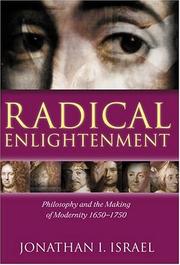 Radical Enlightenment: Philosophy and the Making of Modernity 1650-1750 Shares philosophy, history, nonfiction
 -
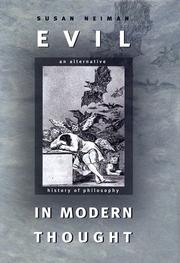 Evil in Modern Thought: An Alternative History of Philosophy Shares philosophy, history, nonfiction