Things a Computer Scientist Rarely Talks About
Sign in to keep track of books you’ve read and want to read.
How does a computer scientist understand infinity? What can probability theory teach us about free will? Can mathematical notions be used to enhance one's personal understanding of the Bible?
Read more
Perhaps no one is more qualified to address these questions than Donald E. Knuth, whose massive contributions to computing have led others to nickname him "The Father of Computer Science"—and whose religious faith led him to understand a fascinating analysis of the Bible called the 3:16 project. In this series of six spirited, informal lectures, Knuth explores the relationships between his vocation and his faith, revealing the unique perspective that his work with computing has lent to his understanding of God.
His starting point is the 3:16 project, an application of mathematical "random sampling" to the books of the Bible. The first lectures tell the story of the project's conception and execution, exploring its many dimensions of language translation, aesthetics, and theological history. Along the way, Knuth explains the many insights he gained from such interdisciplinary work. These theological musings culminate in a surprising final lecture tackling the ideas of infinity, free will, and some of the other big questions that lie at the juncture of theology and computation.
Things a Computer Scientist Rarely Talks About, with its charming and user-friendly format—each lecture ends with a question and answer exchange, and the book itself contains more than 100 illustrations—is a readable and intriguing approach to a crucial topic, certain to edify both those who are serious and curious about their faiths and those who look at the science of computation and wonder what it might teach them about their spiritual world.
Includes "Creativity, Spirituality, and Computer Science," a panel discussion featuring Harry Lewis, Guy L. Steele, Jr., Manuela Veloso, Donald E. Knuth, and Mitch Kapor.
Liked Things a Computer Scientist Rarely Talks About? Here’s where I’d start.
These suit anyone who liked Things a Computer Scientist Rarely Talks About. Sign in and mark a few books for picks shaped around your own taste.
-
 The Elements of Computing Systems: Building a Modern Computer from First Principles Shares computer science, tech, computers
 -
 Basic Category Theory for Computer Scientists Shares computer science, computing, computer
 -
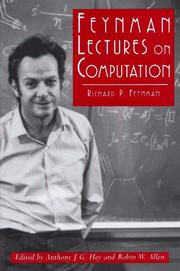 Feynman Lectures On Computation Shares computer science, nonfiction, computers
 -
 D Is for Digital: What a Well-Informed Person Should Know about Computers and Communications Shares computer science, computers, nonfiction