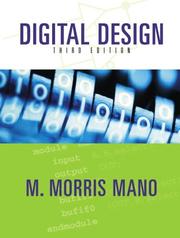
Digital Computer Fundamentals
Sign in to keep track of books you’ve read and want to read.
Digital Computer Fundamentals is an introductory textbook on how digital computers are built and how they work. It starts with the number systems and binary arithmetic a machine uses, then moves to Boolean algebra and the logic circuits that carry out its operations. From there it builds upward, showing how gates and storage elements combine into the registers, memory and control units of a complete computer. Written for students meeting the subject for the first time, it treats the machine as a system of clear, connected parts rather than a black box.
Liked Digital Computer Fundamentals? Here’s where I’d start.
These suit anyone who liked Digital Computer Fundamentals. Sign in and mark a few books for picks shaped around your own taste.
-
 Computer Organization and Architecture: Designing for Performance Shares computer science
-
 Structured Computer Organization Shares computer science
-
 Computers and Intractability: A Guide to the Theory of NP-Completeness Shares computer science
-
 Operating System Concepts with Java Shares computer science