
Going to Extremes: How Like Minds Unite and Divide
Sign in to keep track of books you’ve read and want to read.
Why do people become extremists? What makes people become so dismissive of opposing views? Why is political and cultural polarization so pervasive in America?
Read more
In Going to Extremes, renowned legal scholar and best-selling author Cass R. Sunstein offers startling insights into why and when people gravitate toward extremism. Sunstein marshals a wealth of evidence that shows that when like-minded people gather in groups, they tend to become more extreme in their views than they were before. Thus when liberals group get together to debate climate change, they end up more alarmed about climate change, while conservatives brought together to discuss same-sex unions become more set against same-sex unions. In courtrooms, radio stations, and chatrooms, enclaves of like-minded people are breeding ground for extreme movements. Indeed, Sunstein shows that a good way to create an extremist group, or a cult of any kind, is to separate members from the rest of society, either physically or psychologically. Sunstein's findings help to explain such diverse phenomena as political outrage on the Internet, unanticipated "blockbusters" in the film and music industry, the success of the disability rights movement, ethnic conflict in Iraq and former Yugoslavia, and Islamic terrorism.
Providing a wealth of real-world examples—sometimes entertaining, sometimes alarming—Sunstein offers a fresh explanation of why partisanship has become so bitter and debate so rancorous in America and abroad.
Praise for the hardcover:
"A path-breaking exploration of the perils and possibilities created by polarization among the like-minded."
—Kathleen Hall Jamieson, co-author of unSpun and Echo Chamber
"Poses a powerful challenge to anyone concerned with the future of our democracy. He reveals the dark side to our cherished freedoms of thought, expression and participation. Initiates an urgent dialogue which any thoughtful citizen should be interested in."
—James S. Fishkin, author of When the People Speak
Liked Going to Extremes: How Like Minds Unite and Divide? Here’s where I’d start.
These suit anyone who liked Going to Extremes: How Like Minds Unite and Divide. Sign in and mark a few books for picks shaped around your own taste.
-
 The Rape of the Mind: The Psychology of Thought Control, Menticide, and Brainwashing Shares psychology, nonfiction, science
 -
The Authoritarians Shares psychology, nonfiction, politics
-
 The Guru Papers: Masks of Authoritarian Power Shares nonfiction
 -
 Obedience to Authority Shares psychology, nonfiction, science
“People who read Going to Extremes: How Like Minds Unite and Divide tend to reach for these next.”
-
 Killing the Messenger: A Story of Radical Faith, Racism's Backlash, and the Assassination of a Journalist
-
 The Great Oom: The Improbable Birth of Yoga in America
-
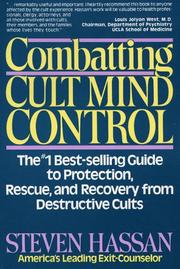 Combatting Cult Mind Control: The #1 Best-selling Guide to Protection, Rescue, and Recovery from Destructive Cults
-
 Women's Letters: America from the Revolutionary War to the Present
“If you want more of the same (psychology), start with these.”




“If it was the science that hooked you, try one of these.”



“These start from a similar idea, even if they go somewhere else with it.”
-
 Who Speaks For Islam?: What a Billion Muslims Really Think
-
 Forces of Fortune: The Rise of the New Muslim Middle Class and What It Will Mean for Our World
- Reclaiming Hope: Lessons Learned in the Obama White House about the Future of Faith in America
-
 The Great Theft: Wrestling Islam from the Extremists