Trees, maps, and theorems
Sign in to keep track of books you’ve read and want to read.
Clear communication is not a matter of style alone. Jean-luc Doumont argues that a message succeeds only when its structure matches how the human mind receives and processes information. Drawing on principles from logic, mathematics and cognitive psychology, he shows how to organize ideas into a clear hierarchy, how to build an argument that follows a rational path, and how to present data without overloading the audience. The book's three metaphors give the title: trees for hierarchical structure, maps for navigation through material, and theorems for logical reasoning. Aimed at scientists, engineers and anyone who speaks or writes to inform, it treats writing and speaking as parts of one discipline and offers concrete methods for preparing, checking and delivering a message.
Liked Trees, maps, and theorems? Here’s where I’d start.
These suit anyone who liked Trees, maps, and theorems. Sign in and mark a few books for picks shaped around your own taste.
-
 I Can See You Naked Shares presentation, communication, nonfiction
-
 The Craft of Scientific Presentations: Critical Steps to Succeed and Critical Errors to Avoid Shares presentation, science, nonfiction
-
 The Science Writers' Handbook: Everything You Need to Know to Pitch, Publish, and Prosper in the Digital Age Shares writing, science, communication
-
 Don't Be Such a Scientist: Talking Substance in an Age of Style Shares science, nonfiction, writing
“If you want more of the same (science about communication), start with these.”



“If it was the presentation that hooked you, try one of these.”
-
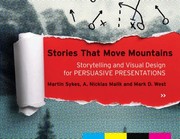 Stories That Move Mountains: Storytelling and Visual Design for Persuasive Presentations
-
 Give Your Speech, Change the World: How To Move Your Audience to Action
-
 If I Understood You, Would I Have This Look on My Face?: My Adventures in the Art and Science of Relating and Communicating
-
 Presentation Secrets