Religion and Science
Sign in to keep track of books you’ve read and want to read.
Religion and Science
by Albert Einstein
The following article by Albert Einstein appeared in the New York Times Magazine on November 9, 1930 pp 1-4. It has been reprinted in Ideas and Opinions, Crown Publishers, Inc. 1954, pp 36 - 40. It also appears in Einstein's book The World as I See It, Philosophical Library, New York, 1949, pp. 24 - 28.
Read more
Everything that the human race has done and thought is concerned with the satisfaction of deeply felt needs and the assuagement of pain. One has to keep this constantly in mind if one wishes to understand spiritual movements and their development. Feeling and longing are the motive force behind all human endeavor and human creation, in however exalted a guise the latter may present themselves to us. Now what are the feelings and needs that have led men to religious thought and belief in the widest sense of the words? A little consideration will suffice to show us that the most varying emotions preside over the birth of religious thought and experience. With primitive man it is above all fear that evokes religious notions - fear of hunger, wild beasts, sickness, death. Since at this stage of existence understanding of causal connections is usually poorly developed, the human mind creates illusory beings more or less analogous to itself on whose wills and actions these fearful happenings depend. Thus one tries to secure the favor of these beings by carrying out actions and offering sacrifices which, according to the tradition handed down from generation to generation, propitiate them or make them well disposed toward a mortal. In this sense I am speaking of a religion of fear. This, though not created, is in an important degree stabilized by the formation of a special priestly caste which sets itself up as a mediator between the people and the beings they fear, and erects a hegemony on this basis. In many cases a leader or ruler or a privileged class whose position rests on other factors combines priestly functions with its secular authority in order to make the latter more secure; or the political rulers and the priestly caste make common cause in their own interests.
Liked Religion and Science? Here’s where I’d start.
These suit anyone who liked Religion and Science. Sign in and mark a few books for picks shaped around your own taste.
-
 Challenging Nature: The Clash of Science and Spirituality at the New Frontiers of Life Shares science, religion
 -
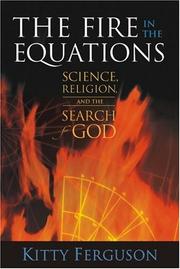 The Fire in the Equations: Science Religion Search For God Shares science, religion
 -
 A History of the Warfare of Science with Theology in Christendom Shares science, religion
 -
 Evolution 2.0: Breaking the Deadlock Between Darwin and Design Shares science, religion
“People who read Religion and Science tend to reach for these next.”


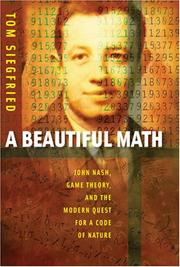
“If you want more of the same (science about religion), start with these.”
-
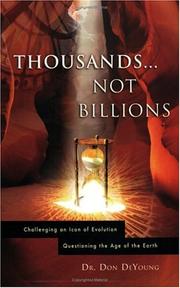 Thousands...Not Billions: Challenging an Icon of Evolution Questioning the Age of the Earth
-
 Creation and Change: Genesis 1:1-2.4 in the Light of Changing Scientific Paradigms
-
 God, the Devil, and Darwin: A Critique of Intelligent Design Theory
- The Neural Correlates of Religious and Nonreligious Belief