Social constructionism
Sign in to keep track of books you’ve read and want to read.
Social constructionism is one of the most influential ideas to have entered psychology and the social sciences in recent decades. This introduction traces its roots and explains its central claims: that the way we understand the world is shaped by the categories and language we inherit, not simply handed to us by observation, and that knowledge is bound up with the cultural and historical moment in which it is produced. Burr shows how these ideas have challenged long-held assumptions about the self, gender, emotion and mental illness, and how they inform research methods that focus on talk, texts and social practices. The book also sets out the main criticisms of the approach, including questions about relativism and what follows for political action. Written for students and researchers, it offers a clear map of a field that is often debated but less often explained.
Liked Social constructionism? Here’s where I’d start.
These suit anyone who liked Social constructionism. Sign in and mark a few books for picks shaped around your own taste.
-
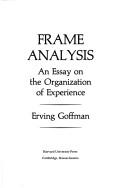 Frame analysis Shares social interaction, social psychology
-
 Understanding the Self and Others Shares social interaction, social psychology, sociology
-
 You're Too Kind Shares social interaction, social psychology, sociology
-
 Handbook of communication and social interaction skills Shares social interaction, social psychology, psychology