Cover of Hidden Order: How Adaptation Builds Complexity

Hidden Order: How Adaptation Builds Complexity

Explains how scientists who study complexity are convinced that certain constant processes are at work in all kinds of unrelated complex systems.

Audience
adult
Length
medium · 208 pages

Click a tag to see books like this one that share it. Point at it (on a phone, tap it) for less of it instead.

Read it? Sign in to help tag it.

Liked Hidden Order: How Adaptation Builds Complexity? Here’s where I’d start.

These suit anyone who liked Hidden Order: How Adaptation Builds Complexity. Sign in and mark a few books for picks shaped around your own taste.

  1. Complex Adaptive Systems: An Introduction to Computational Models of Social Life Shares complexity, science, complex systems
  2. Diversity and Complexity Shares complexity, science, complex systems
  3. Complexity: The Emerging Science at the Edge of Order and Chaos Shares complexity, science, nonfiction
  4. At Home in the Universe: The Search for the Laws of Self-Organization and Complexity Shares complexity, science, nonfiction


“People who read Hidden Order: How Adaptation Builds Complexity tend to reach for these next.”

  1. The Sciences of the Artificial
  2. Complexity: Life at the Edge of Chaos
  3. Sync: The Emerging Science of Spontaneous Order
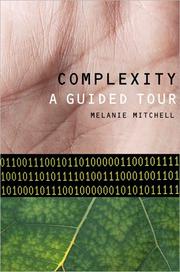
  4. Complexity: A Guided Tour

“If you want more of the same (science), start with these.”

  1. Physics: Principles with Applications
  2. Superstrings: A Theory of Everything?
  3. Instant Physics: From Aristotle to Einstein, and Beyond
  4. Particle Physics For Non Physicists: A Tour Of The Microcosmos

“If it was the complexity that hooked you, try one of these.”

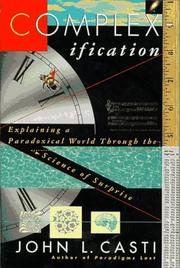
  1. Complexification
  2. Simply Complexity: A Clear Guide to Complexity Theory
  3. How Nature Works: The Science of Self-Organized Criticality
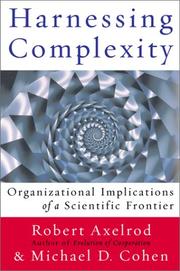
  4. Harnessing Complexity

“These start from a similar idea, even if they go somewhere else with it.”

  1. Simply Effective: How to Cut Through Complexity in Your Organization and Get Things Done
  2. Overcomplicated: Technology at the Limits of Comprehension
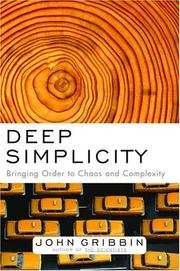
  3. Deep Simplicity: Bringing Order to Chaos and Complexity
  4. The Allure of Machinic Life