Complex Adaptive Systems: An Introduction to Computational Models of Social Life
Sign in to keep track of books you’ve read and want to read.
This book provides the first clear, comprehensive, and accessible account of complex adaptive social systems, by two of the field's leading authorities. Such systems—whether political parties, stock markets, or ant colonies—present some of the most intriguing theoretical and practical challenges confronting the social sciences. Engagingly written, and balancing technical detail with intuitive explanations, Complex Adaptive Systemsfocuses on the key tools and ideas that have emerged in the field since the mid-1990s, as well as the techniques needed to investigate such systems. It provides a detailed introduction to concepts such as emergence, self-organized criticality, automata, networks, diversity, adaptation, and feedback. It also demonstrates how complex adaptive systems can be explored using methods ranging from mathematics to computational models of adaptive agents.
Read more
John Miller and Scott Page show how to combine ideas from economics, political science, biology, physics, and computer science to illuminate topics in organization, adaptation, decentralization, and robustness. They also demonstrate how the usual extremes used in modeling can be fruitfully transcended.
Liked Complex Adaptive Systems: An Introduction to Computational Models of Social Life? Here’s where I’d start.
These suit anyone who liked Complex Adaptive Systems: An Introduction to Computational Models of Social Life. Sign in and mark a few books for picks shaped around your own taste.
-
 Hidden Order: How Adaptation Builds Complexity Shares complexity, science, complex systems
 -
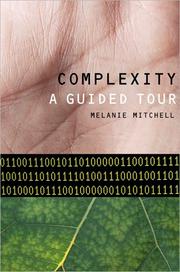 Complexity: A Guided Tour Shares complexity, science, nonfiction
 -
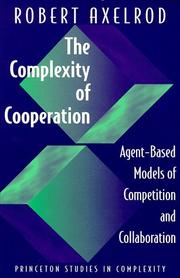 The Complexity of Cooperation: Agent-Based Models of Competition and Collaboration Shares complexity, science, economics
 -
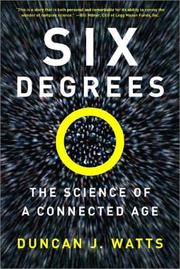 Six Degrees: The Science of a Connected Age Shares science, complexity, nonfiction