Sync: The Emerging Science of Spontaneous Order
Sign in to keep track of books you’ve read and want to read.
At the heart of the universe is a steady, insistent beat, the sound of cycles in sync. Along the tidal rivers of Malaysia, thousands of fireflies congregate and flash in unison; the moon spins in perfect resonance with its orbit around the earth; our hearts depend on the synchronous firing of ten thousand pacemaker cells. While the forces that synchronize the flashing of fireflies may seem to have nothing to do with our heart cells, there is in fact a deep connection. Synchrony is a science in its infancy, and Strogatz is a pioneer in this new frontier in which mathematicians and physicists attempt to pinpoint just how spontaneous order emerges from chaos. From underground caves in Texas where a French scientist spent six months alone tracking his sleep-wake cycle, to the home of a Dutch physicist who in 1665 discovered two of his pendulum clocks swinging in perfect time, this fascinating book spans disciplines, continents, and centuries. Engagingly written for readers of books such as Chaosand The Elegant Universe, Syncis a tour-de-force of nonfiction writing.
Liked Sync: The Emerging Science of Spontaneous Order? Here’s where I’d start.
These suit anyone who liked Sync: The Emerging Science of Spontaneous Order. Sign in and mark a few books for picks shaped around your own taste.
-
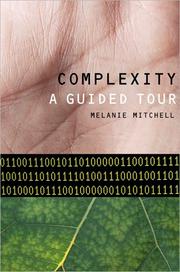 Complexity: A Guided Tour Shares science, complexity, nonfiction
 -
 At Home in the Universe: The Search for the Laws of Self-Organization and Complexity Shares science, complexity, nonfiction
 -
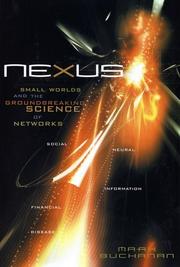 Nexus: Small Worlds and the Groundbreaking Theory of Networks Shares science, complexity, nonfiction
 -
 Emergence: The Connected Lives of Ants, Brains, Cities, and Software Shares science, nonfiction, complexity